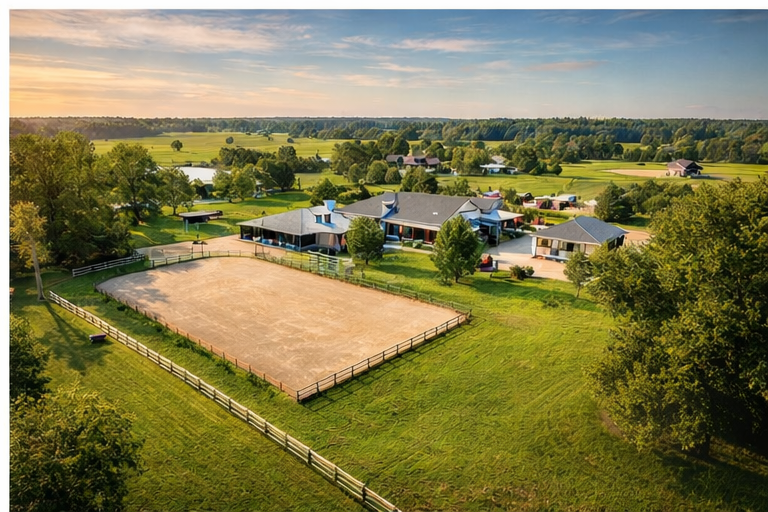
 When buying a horse property, pasture quality is one of the most important—and often overlooked—factors. A property may look spacious and green, but not all pasture land functions well for horses. Good pasture supports healthy grazing, safe movement, and manageable maintenance costs, while poor pasture can quickly lead to mud, erosion, and expensive repairs.
Land quality matters more than appearance alone.
Healthy Grass Is the Foundation
Productive pasture starts with healthy grass coverage. Look for:
-
Thick, established grass rather than bare soil
-
Grass varieties suited for grazing horses
-
Minimal weed or invasive plant growth
Thin or patchy pasture often signals drainage issues, overgrazing, or poor soil health—all of which increase long-term maintenance.
Proper Drainage Prevents Costly Problems
Drainage is critical for both horse safety and land usability. Poor drainage can cause:
-
Persistent mud and standing water
-
Hoof health issues
-
Erosion and uneven ground
-
Limited turnout during wet seasons
Well-drained pasture allows for year-round use and reduces maintenance costs over time.
Soil Quality Affects Usability
Soil composition impacts how pasture holds water and supports grass growth. Heavy clay soil may retain too much moisture, while sandy soil may require more frequent management.
Evaluating soil type helps determine:
-
Pasture durability
-
Maintenance requirements
-
Potential improvement costs
Understanding soil conditions ensures realistic expectations for upkeep.
Safe and Functional Fencing Is Essential
Fencing plays a major role in pasture safety and usability. Buyers should look for:
-
Horse-safe materials such as board, vinyl, or no-climb wire
-
Proper spacing and secure posts
-
Gates positioned for efficient access
Poor fencing can become a safety hazard and add immediate replacement costs.
Pasture Layout and Rotation Matter
Well-designed pasture allows for grazing rotation, which helps maintain grass health and reduce overuse.
Important layout considerations include:
-
Multiple turnout areas
-
Accessibility from the barn
-
Space for rest and recovery
Properties with rotation options typically require less feed supplementation and have lower long-term maintenance.
Long-Term Maintenance Costs Should Be Considered
Pasture land requires ongoing care, including mowing, fertilizing, reseeding, and manure management. Buyers should factor these costs into ownership decisions.
Lower-quality pasture often means:
-
Higher feed costs
-
More frequent repairs
-
Increased labor and expenses
Why Experience Matters
Evaluating pasture land requires more than a quick walk-through. Experienced equestrian professionals help buyers:
-
Identify hidden drainage or soil issues
-
Estimate improvement costs
-
Understand long-term maintenance needs
-
Choose land that fits their lifestyle and budget
Experience helps buyers avoid costly surprises.
Work With Kimberly Sut Group
At Kimberly Sut Group, we help buyers across Northwest Indiana evaluate pasture quality and land usability for equestrian properties. Our experience ensures you purchase land that supports both your horses and your long-term investment.
👉What’s My Property Worth? https://www.kimberlysutgroup.com/seller/homeestimate/default
Call or text: (219) 789-1987
Visit our website: https://www.kimberlysutgroup.com
Follow us on Facebook: https://www.facebook.com/Kimberlysutrealestate/


Read our 5-Star Google Reviews: https://g.page/r/CVNvGzCU3UZ3EBM/review

Kimberly Sut Group
Top Realtor for Buyers & Sellers in Northwest Indiana
Specializing in VA Homes, First-Time Home Buyers, Estate Sales & Relocations