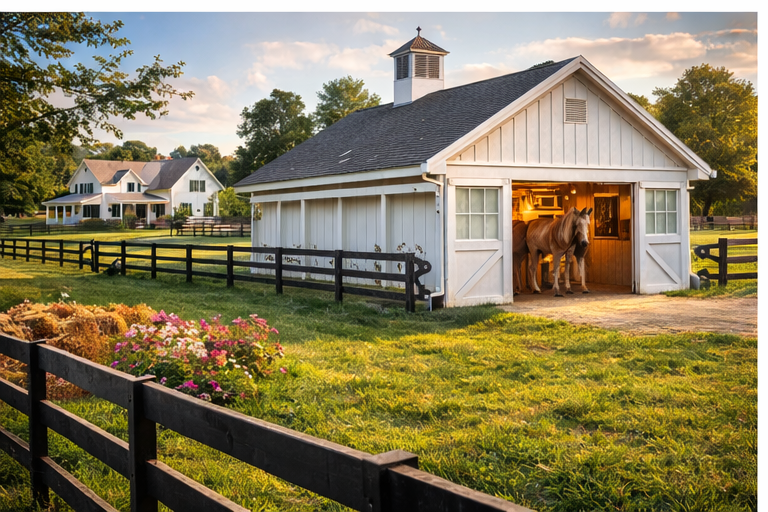
 Building a barn after purchasing land is a common goal for equestrian buyers—but it’s not something that should be assumed. Zoning regulations, permits, setbacks, and utility access must be confirmed before you buy, not after. Skipping this step can lead to delays, unexpected costs, or limitations that prevent you from building the barn you planned.
When it comes to building a barn, experience matters.
Zoning Determines Whether a Barn Is Allowed
Zoning is the first and most important factor. Even properties with large acreage may restrict agricultural or equestrian structures.
Before purchasing land, buyers should confirm:
-
The zoning classification
-
Whether barns and equestrian buildings are permitted
-
Limits on barn size or number of structures
-
Horse or livestock allowances
Never rely on acreage alone—zoning controls what can be built.
Permits and Local Regulations Matter
Most municipalities require permits for barns and agricultural structures. These permits ensure compliance with safety, environmental, and land-use regulations.
Buyers should understand:
-
Building permit requirements
-
Environmental or drainage approvals
-
Septic or water system considerations
-
Inspection timelines
Permit requirements vary widely by location, so early verification is critical.
Setbacks Affect Barn Placement
Setback rules determine how far structures must be from property lines, roads, and waterways.
Proper placement should consider:
-
Required distances from neighboring properties
-
Drainage and grading
-
Access for equipment and trailers
-
Daily workflow between barn, pasture, and home
Poor placement can reduce usability and long-term value.
Utility Access Should Be Planned Early
A functional barn requires utilities. Buyers should confirm:
-
Water access for stalls and wash areas
-
Electrical service for lighting and equipment
-
Feasible routes for utility installation
Adding utilities later can significantly increase costs if not planned in advance.
Plan for Future Expansion
Even if you plan to build a modest barn now, zoning should support future needs.
Consider whether zoning allows:
-
Additional stalls or buildings
-
Arenas or training spaces
-
Expanded fencing and turnout
Planning ahead protects flexibility and resale value.
Why Experience Matters
Building a barn involves more than construction—it requires understanding land use, zoning, and long-term planning. An experienced equestrian real estate professional helps buyers:
-
Verify zoning and permitted uses
-
Identify land suitable for barn placement
-
Avoid costly mistakes before purchase
Experience saves time, money, and frustration.
Work With Kimberly Sut Group
At Kimberly Sut Group, we help buyers across Northwest Indiana evaluate land for future barns and equestrian use. Our experience ensures the property you purchase supports your goals from day one.
👉What’s My Property Worth? https://www.kimberlysutgroup.com/seller/homeestimate/default
Call or text: (219) 789-1987
Visit our website: https://www.kimberlysutgroup.com
Follow us on Facebook: https://www.facebook.com/Kimberlysutrealestate/


Read our 5-Star Google Reviews: https://g.page/r/CVNvGzCU3UZ3EBM/review

Kimberly Sut Group
Top Realtor for Buyers & Sellers in Northwest Indiana
Specializing in VA Homes, First-Time Home Buyers, Estate Sales & Relocations