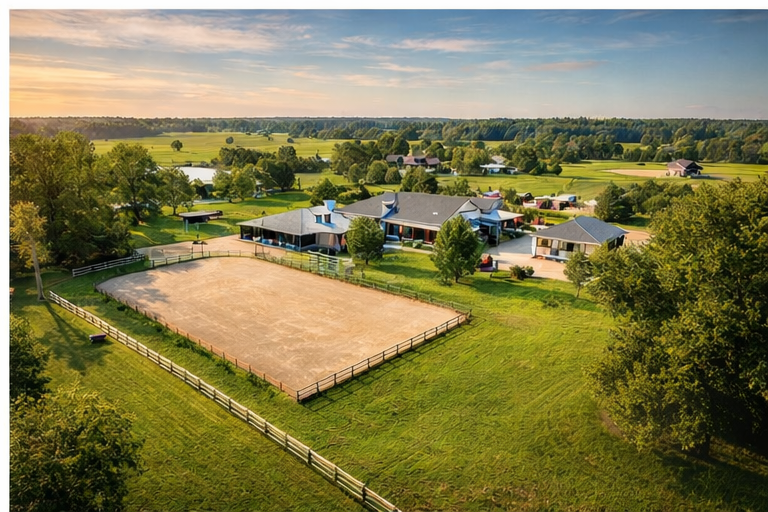
 Drainage is one of the most critical—and often underestimated—factors on a horse property. Proper drainage affects pasture health, barn usability, horse safety, and long-term maintenance costs. Poor drainage can turn an otherwise beautiful property into a daily challenge and significantly reduce both usability and value.
On equestrian properties, drainage isn’t just a convenience—it’s essential.
Drainage Directly Impacts Pasture Health
Well-drained pastures support healthy grass growth and safer turnout. Poor drainage can cause:
-
Persistent mud and standing water
-
Grass loss and soil compaction
-
Increased erosion
-
Limited grazing and turnout time
When pasture is frequently wet, horses are more likely to damage turf, leading to higher feed costs and ongoing maintenance.
Barn Usability Depends on Drainage
Barns and surrounding areas must remain accessible year-round. Drainage problems around barns can result in:
-
Muddy or icy walkways
-
Standing water near entrances
-
Unsafe conditions for horses and handlers
-
Damage to foundations and flooring
Buyers often view drainage issues near barns as red flags that can affect both safety and resale value.
Safety Is a Major Concern
Poor drainage increases the risk of:
-
Slips and falls for horses and people
-
Hoof problems and infections
-
Equipment getting stuck or damaged
Safe footing is essential on equestrian properties, and drainage plays a major role in maintaining it.
Drainage Affects Long-Term Maintenance Costs
Properties with drainage issues often require ongoing repairs, including:
-
Regrading land
-
Installing drainage systems
-
Frequent reseeding of pasture
-
Additional labor and expense
Proper drainage reduces maintenance demands and protects long-term value.
Drainage Influences Property Value and Buyer Demand
Equestrian buyers pay close attention to drainage because it impacts daily usability. Properties with poor drainage often:
-
Sit on the market longer
-
Receive lower offers
-
Face increased inspection concerns
Good drainage, on the other hand, enhances functionality and market appeal.
What Buyers Should Look For
When evaluating drainage, buyers should observe:
-
How water moves after rainfall
-
Low-lying or muddy areas
-
Signs of erosion or pooling
-
Barn placement relative to slope and grade
Understanding drainage before purchase helps avoid costly surprises.
Why Experience Matters
Identifying drainage issues requires experience. An equestrian real estate professional helps buyers and sellers:
-
Recognize potential drainage problems
-
Understand improvement options
-
Assess impact on usability and value
Experience leads to smarter decisions and better outcomes.
Work With Kimberly Sut Group
At Kimberly Sut Group, we help buyers and sellers across Northwest Indiana evaluate drainage and land usability on equestrian properties. Our experience ensures that critical factors—like drainage—are addressed before they become problems.
👉What’s My Property Worth? https://www.kimberlysutgroup.com/seller/homeestimate/default
Call or text: (219) 789-1987
Visit our website: https://www.kimberlysutgroup.com
Follow us on Facebook: https://www.facebook.com/Kimberlysutrealestate/


Read our 5-Star Google Reviews: https://g.page/r/CVNvGzCU3UZ3EBM/review

Kimberly Sut Group
Top Realtor for Buyers & Sellers in Northwest Indiana
Specializing in VA Homes, First-Time Home Buyers, Estate Sales & Relocations