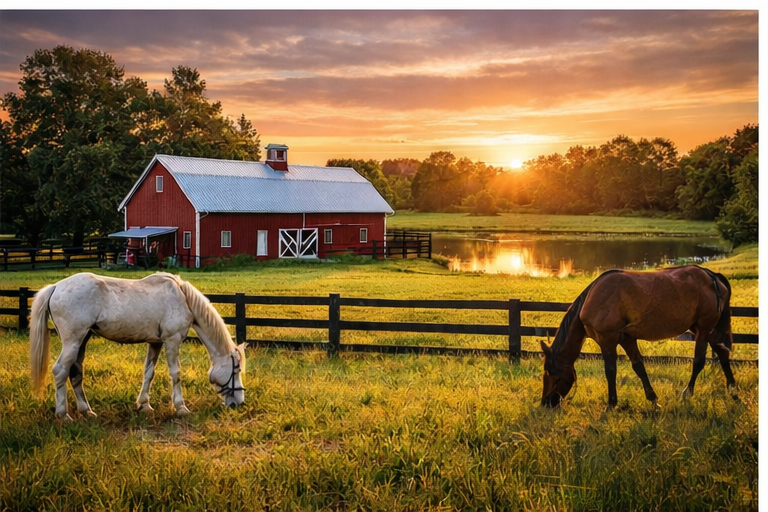
 Horse properties are unique because they sit at the intersection of residential living and agricultural land use. Unlike standard homes, equestrian properties must function safely and efficiently for both people and animals. This complexity means buying or selling a horse property requires specialized knowledge, not a one-size-fits-all real estate approach.
When experience guides the process, outcomes are stronger, smoother, and more predictable.
Why Horse Properties Are Different From Standard Homes
Equestrian properties combine multiple real estate elements, including:
-
A residential home
-
Acreage with agricultural or rural zoning
-
Specialized improvements such as barns, fencing, and arenas
-
Land intended for pasture, turnout, or hay production
Each of these components affects value, usability, financing, and resale potential.
Land Use and Function Matter as Much as the House
On a horse property, land functionality often outweighs interior finishes.
Buyers and sellers must evaluate:
-
Usable acreage versus total acreage
-
Pasture quality, soil type, and drainage
-
Safe fencing and turnout layout
-
Access for trailers, equipment, and daily operations
Poor land usability can reduce value—even when the home is well-maintained.
Zoning and Agricultural Regulations Add Complexity
Zoning determines how the property can be used and expanded.
Key considerations include:
-
Whether horses are permitted
-
Horse-per-acre allowances
-
Permission for barns, arenas, or additional structures
-
Restrictions on income-producing activities
Understanding zoning is critical to protecting both short-term use and long-term value.
Financing and Appraisals Require Extra Attention
Because horse properties are not typical residential homes, financing and appraisals often take longer.
Challenges can include:
-
Large acreage
-
Mixed zoning classifications
-
Limited comparable sales
-
Evaluation of barns and equestrian improvements
Specialized knowledge helps anticipate and manage these challenges before they cause delays.
Selling Requires a Targeted Strategy
Marketing a horse property is about more than photos of the home.
Successful equestrian marketing highlights:
-
How the land functions
-
Barn and pasture usability
-
Zoning and permitted uses
-
Lifestyle appeal for horse owners
Buyers want to understand daily operations—not just visual appeal.
Why Specialized Knowledge Leads to Better Outcomes
Equestrian real estate blends residential, agricultural, and lifestyle considerations. An experienced equestrian real estate professional helps:
-
Price properties accurately
-
Identify and address land or zoning issues early
-
Market to the correct buyer pool
-
Navigate inspections, appraisals, and financing smoothly
Experience reduces surprises and protects investment value.
Work With Kimberly Sut Group
At Kimberly Sut Group, we specialize in equestrian and acreage properties across Northwest Indiana. Our specialized knowledge allows us to guide buyers and sellers through complex transactions with clarity and confidence—leading to better outcomes at every stage.
👉What’s My Property Worth? https://www.kimberlysutgroup.com/seller/homeestimate/default
Call or text: (219) 789-1987
Visit our website: https://www.kimberlysutgroup.com
Follow us on Facebook: https://www.facebook.com/Kimberlysutrealestate/


Read our 5-Star Google Reviews: https://g.page/r/CVNvGzCU3UZ3EBM/review

Kimberly Sut Group
Top Realtor for Buyers & Sellers in Northwest Indiana
Specializing in VA Homes, First-Time Home Buyers, Estate Sales & Relocations