


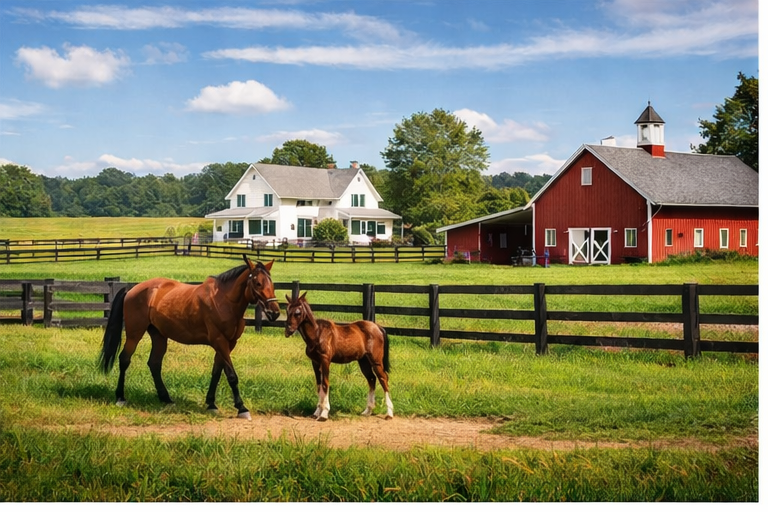
Equestrian properties are appraised differently than standard residential homes. These properties combine land value, equestrian improvements, zoning considerations, and residential features, making the appraisal process more complex. Without proper experience guiding the transaction, appraisals can become a major obstacle between contract and closing.
Experience helps ensure value is properly supported every step of the way.
Why Equestrian Appraisals Are More Complex
Unlike traditional homes, equestrian properties include multiple value components that must be evaluated together, including:
-
Usable acreage versus total acreage
-
Pasture quality, soil, and drainage
-
Barns, arenas, fencing, and outbuildings
-
Zoning and permitted land use
Each of these elements impacts market value and must be supported with appropriate data.
Land Value Plays a Larger Role
In equestrian real estate, land often represents a significant portion of the property’s value.
Appraisers evaluate:
-
How much of the land is usable for horses
-
How the land compares to similar equestrian properties
-
Location, access, and layout
Land that functions well for equestrian use is more likely to support a strong appraisal.
Improvements Must Be Functional and Market-Relevant
Barns and arenas add value only when they are functional, permitted, and typical for the market.
Appraisers consider:
-
Stall size, barn layout, and ventilation
-
Arena footing, drainage, and usability
-
Condition and maintenance of structures
Overbuilt or poorly maintained improvements may not contribute positively to value.
Comparable Sales Are Harder to Find
One of the biggest challenges in equestrian appraisals is identifying appropriate comparable sales.
Appraisers look for:
-
Similar acreage and zoning
-
Comparable equestrian features
-
Properties with similar land usability
Using standard residential comparables can undervalue an equestrian property.
Zoning and Permitted Use Matter
Zoning directly impacts how a property can be used and affects value.
Appraisers evaluate:
-
Horse-per-acre allowances
-
Restrictions on barns or expansion
-
Agricultural versus residential classifications
Clear zoning documentation helps support valuation.
Why Experience Protects Value
Experienced equestrian real estate professionals help ensure appraisals are supported by:
-
Providing accurate property details
-
Supplying relevant equestrian comparables
-
Explaining land use and functionality
-
Anticipating appraisal questions before they arise
This experience reduces delays, renegotiations, and failed transactions.
From Contract to Closing—Support Matters
Many equestrian deals fall apart due to appraisal issues that could have been avoided with proper preparation. Experience ensures:
-
Buyers understand appraisal expectations
-
Sellers price properties realistically
-
Lenders receive clear documentation
Strong support keeps transactions moving forward.
Work With Kimberly Sut Group
At Kimberly Sut Group, we help buyers and sellers across Northwest Indiana navigate equestrian appraisals with confidence. Our experience ensures property value is clearly supported from contract to closing.
👉What’s My Property Worth? https://www.kimberlysutgroup.com/seller/homeestimate/default
Call or text: (219) 789-1987
Visit our website: https://www.kimberlysutgroup.com
Follow us on Facebook: https://www.facebook.com/Kimberlysutrealestate/


Read our 5-Star Google Reviews: https://g.page/r/CVNvGzCU3UZ3EBM/review

Kimberly Sut Group
Top Realtor for Buyers & Sellers in Northwest Indiana
Specializing in VA Homes, First-Time Home Buyers, Estate Sales & Relocations