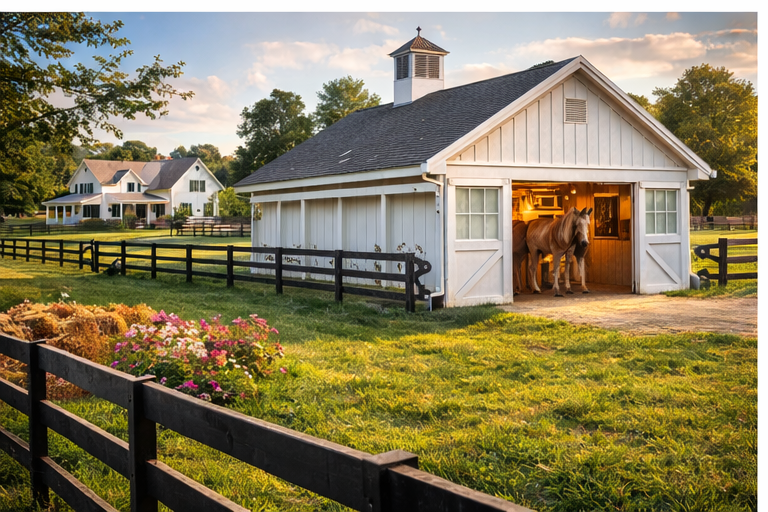
 Equestrian properties can be used as investment properties—but only when zoning, land use regulations, and market demand align. While some horse properties allow income-generating activities such as boarding, training, or land leasing, not all equestrian properties are permitted to operate this way.
Before purchasing an equestrian property as an investment, buyers should fully understand what is allowed and how it impacts value, financing, and long-term return.
Zoning Determines Investment Potential
Zoning is the most important factor in determining whether an equestrian property can generate income.
Depending on local regulations, zoning may allow:
-
Horse boarding or partial boarding
-
Training or lesson operations
-
Leasing pasture or stall space
-
Agricultural or land-use leasing
Other properties may be restricted to personal use only. Confirming zoning before purchase is critical to avoid legal and financial issues.
Income-Producing Use Can Affect Financing
Equestrian properties used for income may face different financing requirements. Lenders often evaluate:
-
Whether the property is primarily residential or commercial
-
Income history or projected income
-
Zoning compliance for business use
Some income-producing equestrian properties may require specialized or portfolio financing rather than traditional residential loans.
Maintenance and Operating Costs Matter
While equestrian properties can produce income, they also come with higher operating costs.
Buyers should factor in:
-
Ongoing maintenance of barns, fencing, and pastures
-
Insurance requirements
-
Labor and management costs
-
Utilities and infrastructure upkeep
Understanding expenses is essential for evaluating true investment potential.
Market Demand Is Key
Successful equestrian investments depend on local demand. Buyers should consider:
-
Demand for boarding or training facilities in the area
-
Proximity to riding trails, shows, or equestrian communities
-
Accessibility for clients and service providers
Strong demand increases occupancy and long-term value.
Investment Use Impacts Resale Value
Income-producing equestrian properties may appeal to a narrower buyer pool. Buyers should consider:
-
Flexibility for future personal use
-
How zoning affects resale options
-
Marketability if income use changes
Properties with adaptable layouts and zoning often retain stronger resale value.
Why Experience Matters
Equestrian investment properties require specialized evaluation. Experienced equestrian real estate professionals help buyers:
-
Confirm permitted income uses
-
Evaluate operating costs
-
Understand financing options
-
Avoid zoning and compliance issues
Experience protects both investment and long-term value.
Work With Kimberly Sut Group
At Kimberly Sut Group, we help buyers across Northwest Indiana evaluate equestrian properties for personal use, investment potential, or both. Our experience ensures you understand zoning, income possibilities, and long-term value before making a purchase.
👉What’s My Property Worth? https://www.kimberlysutgroup.com/seller/homeestimate/default
Call or text: (219) 789-1987
Visit our website: https://www.kimberlysutgroup.com
Follow us on Facebook: https://www.facebook.com/Kimberlysutrealestate/


Read our 5-Star Google Reviews: https://g.page/r/CVNvGzCU3UZ3EBM/review

Kimberly Sut Group
Top Realtor for Buyers & Sellers in Northwest Indiana
Specializing in VA Homes, First-Time Home Buyers, Estate Sales & Relocations